What counts as custom work wear and uniforms?
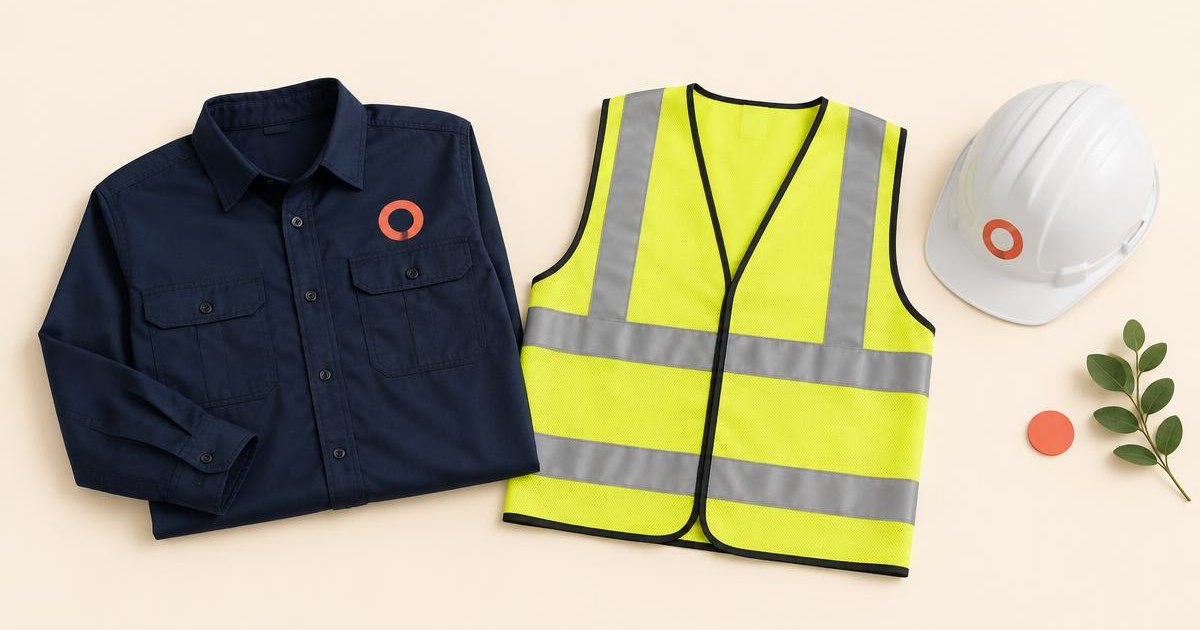
Custom work wear is any garment or piece of protective gear a crew wears on the job that carries the company's name or logo. The category covers three groups: everyday uniform pieces such as custom work shirts, polos and jackets; high-visibility apparel such as vests, tees and jackets; and head protection such as custom hard hats. Each group takes a logo differently, and two of the three are governed by safety standards that limit where and how a logo can be applied.
A good uniform program does three jobs at once. Custom work wear identifies who belongs on a site, makes a crew look like one company in front of customers, and turns every truck stop and service call into a small piece of advertising. The decoration choices below decide whether that logo still looks sharp after months of industrial laundering.
What is the best way to put a logo on custom work shirts?
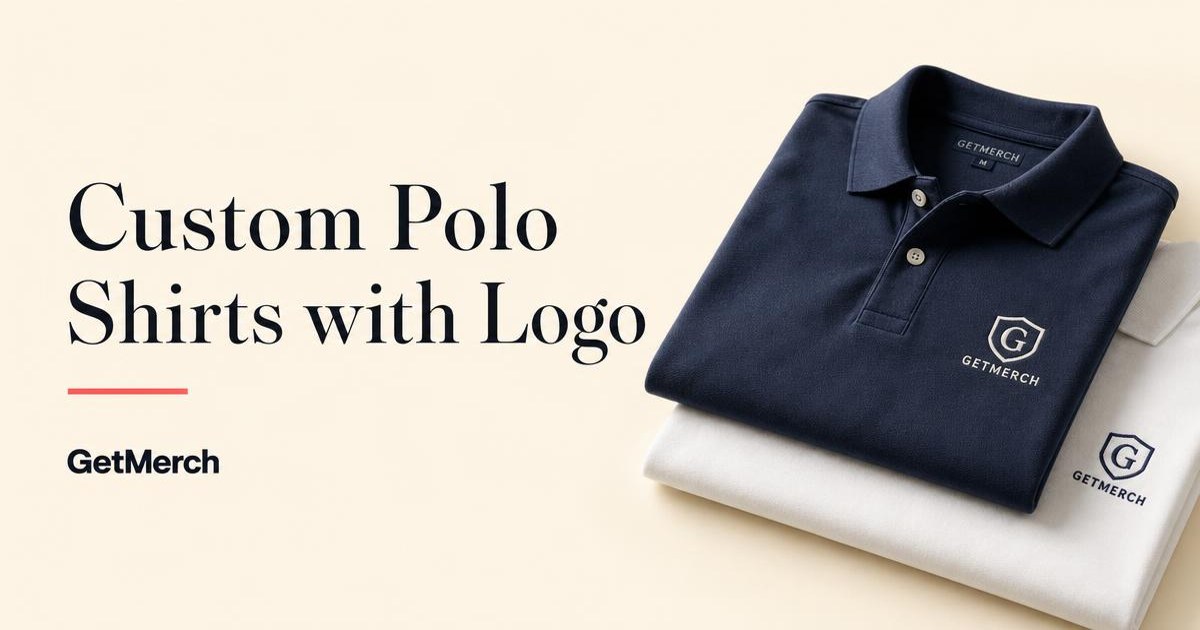
Embroidery is the best logo method for most custom work shirts because stitched thread survives heavy washing, abrasion and sun far longer than ink. Work shirts are commonly woven from a 65/35 polyester-cotton blend, a stable fabric that holds stitches without puckering. A left-chest logo around 3.5 to 4 inches wide is the standard size, large enough to read across a room and small enough to sit flat above a pocket.
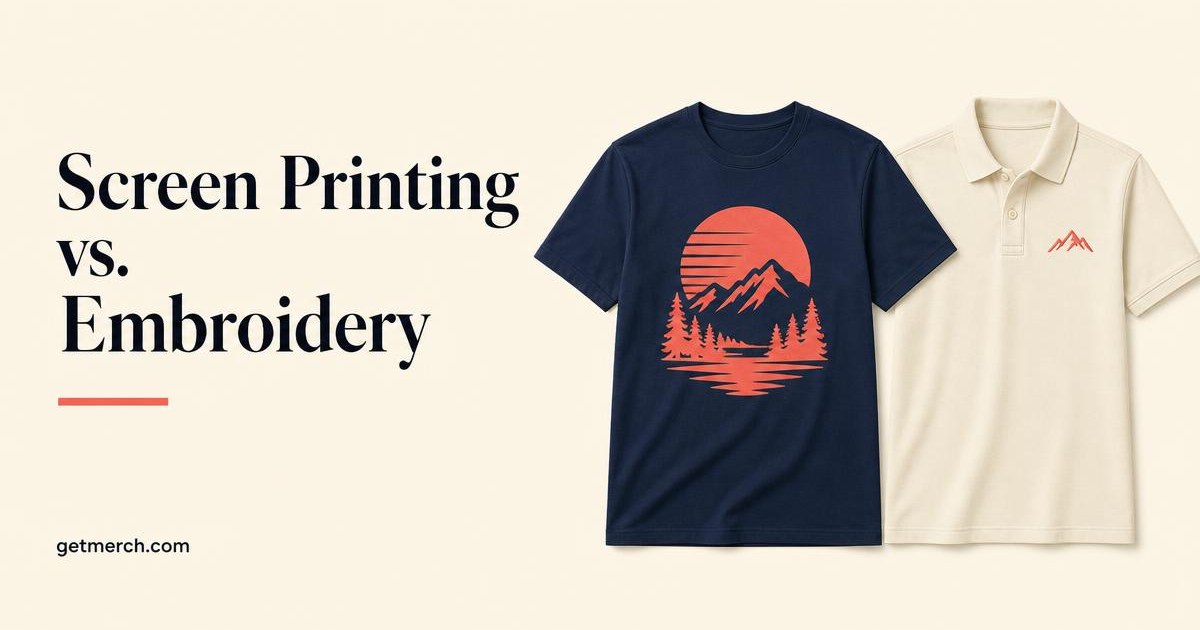
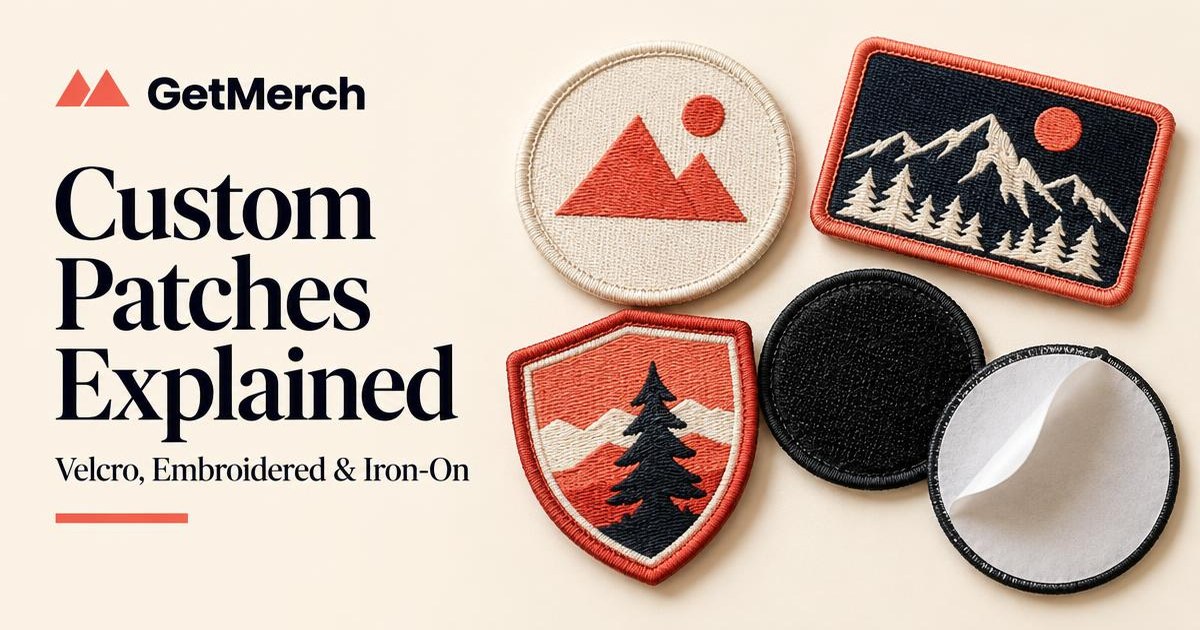
Screen printing is the better choice for custom work shirts that need a large back print, such as a company name and phone number across the shoulders. Heat transfers suit small runs with individual names. Sewn or heat-applied patches are the classic option for mechanic and service shirts, because a name patch can be swapped when staff change. Our guide to screen printing vs. embroidery and the guide to custom patches cover those trade-offs in more depth.
Can you put a logo on hi-vis clothing without breaking compliance?
Yes, a logo can go on hi-vis clothing, as long as the garment still meets ANSI/ISEA 107 after decoration. That standard sorts high-visibility apparel into three types (Type O for off-road, Type R for roadway and Type P for public safety) and three performance classes. A Type R Class 2 garment needs at least 775 square inches of fluorescent background material and 201 square inches of retroreflective material; Class 3 raises those minimums to 1,240 and 310 square inches.
A logo covers fluorescent fabric, so an oversized print can pull a hi-vis vest below its class minimum. The safe approach is a modest left-chest logo and a back print sized to stay clear of the reflective tape, never printed over the tape itself. Heat transfer and screen printing are the usual methods on hi-vis polyester mesh and solid knits; embroidery works on heavier hi-vis jackets. Ask the supplier to confirm the decorated garment keeps its class rating before approving the proof.
How do custom hard hats get branded safely?
Custom hard hats are branded with pad printing or with adhesive decals, never with paint, engraving or anything that cuts or chemically attacks the shell. Pad printing transfers ink from a silicone pad onto the curved front, sides or back of the helmet and is the standard factory method for bulk logo orders. Decals are the flexible option for small quantities, crew names and certification stickers.
Hard hats sold for US job sites are rated under ANSI/ISEA Z89.1. Type I helmets protect against impact to the top of the head and Type II helmets add lateral protection. Class G hard hats are tested at 2,200 volts, Class E at 20,000 volts, and Class C offers no electrical protection. Branding must not change any of that. OSHA guidance on decorating head protection points back to the helmet manufacturer's instructions: solvents and some paints can weaken the shell, and stickers should not hide cracks or damage an inspector needs to see.
Which decoration method fits each piece of work wear?
| Item | Best logo method | Typical placement | Watch out for |
|---|---|---|---|
| Custom work shirts | Embroidery; patches for names | Left chest, right-chest name, back yoke | Thin fabrics can pucker under dense stitching |
| Work polos | Embroidery | Left chest, sleeve | Small text below about a quarter inch fills in |
| Hi-vis vests and tees | Heat transfer or screen print | Left chest, upper back | Logo area reduces fluorescent background; keep off reflective tape |
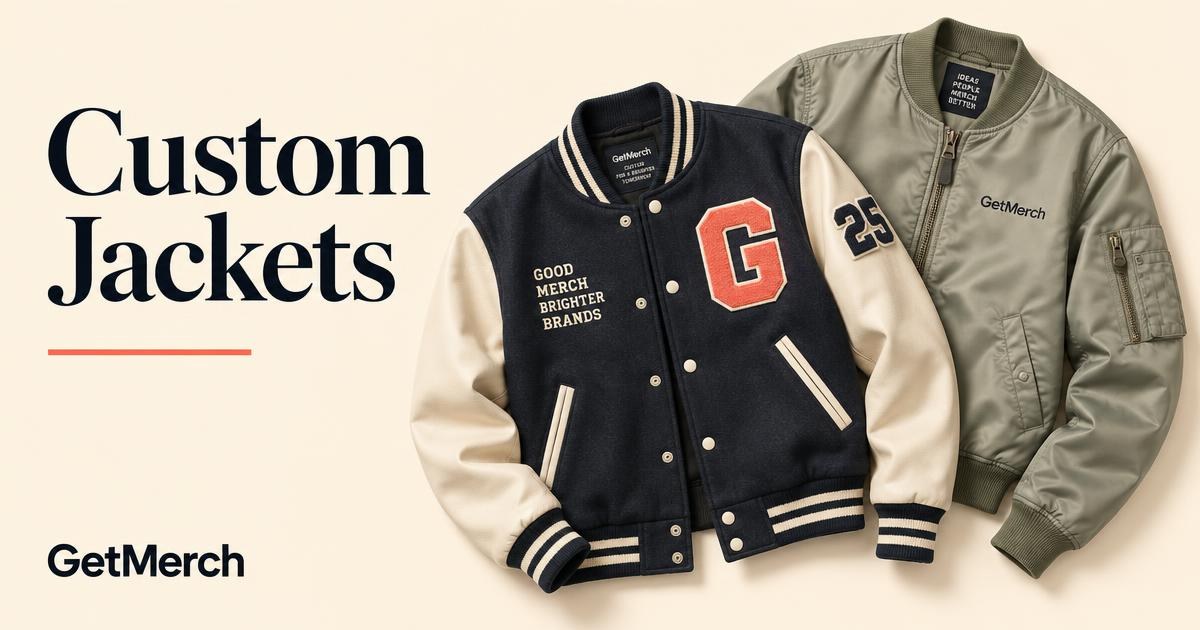
| Work jackets | Embroidery or patches | Left chest, full back | Stitching through waterproof shells needs seam sealing |
| Custom hard hats | Pad print or decal | Front, sides, back | Follow the helmet maker's rules; no paint or solvents |
| Flame-resistant garments | FR-rated embroidery or emblems | Left chest | Standard thread and patches can compromise FR protection |
Where should a logo go on work wear?
The left chest is the default logo position on custom work wear because that spot stays visible under an open jacket, above a tool vest and in a face-to-face conversation. The right chest is conventionally reserved for the wearer's name. The upper back is the billboard position, the one seen by the public when a crew is working, and suits a large company name, a phone number or a web address.
Sleeves and collars work for secondary marks such as a safety slogan or a department name. On custom hard hats, the front carries the company logo, the sides carry secondary marks, and the back often carries the wearer's name. Keep one consistent layout across shirts, custom polo shirts, custom jackets and custom aprons so the crew reads as one brand.
What should you prepare before ordering custom uniforms in bulk?
A bulk order of custom work wear goes smoothly when five things are settled before the quote request:
- 1. A vector logo file (AI, EPS, SVG or a vector PDF), plus the brand's color references. Embroidery needs the logo digitized into a stitch file once, which is then reused on every reorder.
- 2. A size breakdown by person, not a guess. Collect sizes with a sample run or a size chart, because work wear is cut roomier than retail clothing.
- 3. The safety requirement for each role: which workers need ANSI/ISEA 107 Class 2 or Class 3 apparel, and which hard hat type and class the site requires.
- 4. The list of names and titles for personalization, spelled exactly as they should appear.
- 5. A reorder plan. New hires arrive all year, so choose stock garment styles and colors that will still be available in six months.
What mistakes do companies make with branded work wear?
The most common mistake with branded work wear is treating safety gear like a T-shirt. Printing a large logo over reflective tape, painting hard hats in company colors, or sewing ordinary patches onto flame-resistant coveralls can all take protective equipment out of compliance. The second mistake is choosing a fashion-weight shirt for an industrial job; lightweight fabric fades and tears long before the embroidery wears out.
Other avoidable problems include logos with thin lines that disappear in thread, colors that vanish against a fluorescent background, and ordering exact headcount with no spares for new starters. A printed proof on the actual garment color catches most of these before production begins.
How do you order custom work wear from GetMerch?
GetMerch is a custom merchandise company that produces branded apparel and promotional products with custom artwork, low prices and zero hassle. For custom work shirts, hi-vis apparel and custom hard hats, send GetMerch the logo, the quantities by size and the safety ratings each role needs, and the team will reply with a quote and a proof to approve before anything is produced. Request a custom work wear quote or browse more branded gear on the Accessories & Promo page.