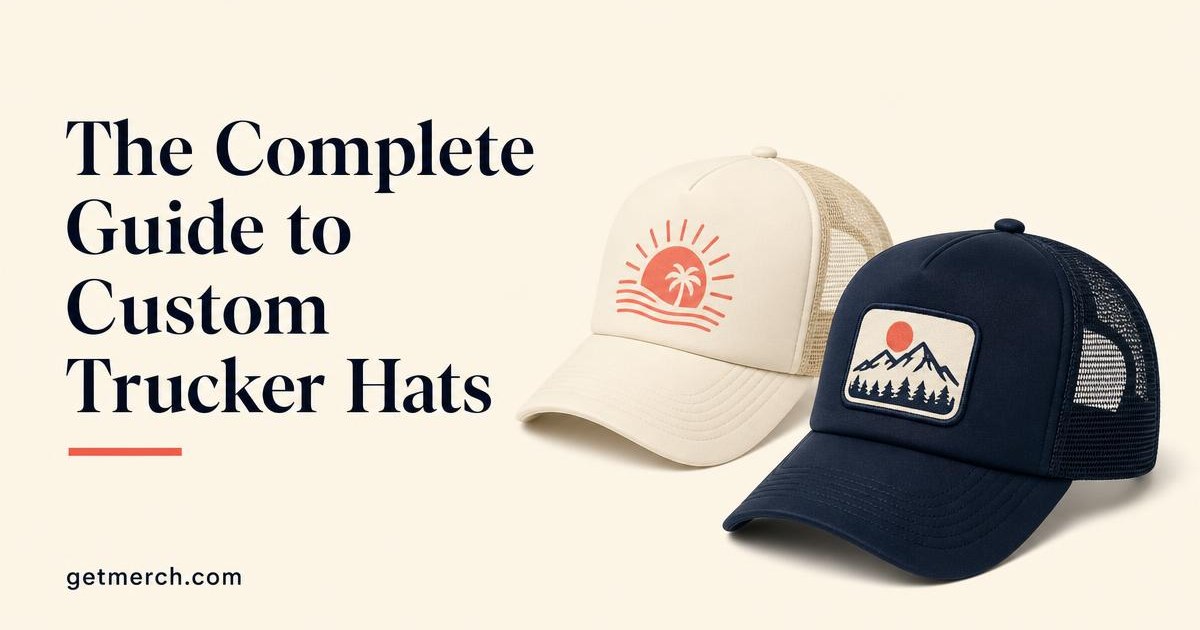
A few years ago, a trucker hat was a throwback - the thing your uncle wore to the feed store. Today it's the default hat of festivals, breweries, startups, and Saturday-morning coffee runs. The mesh back, the structured foam front, the slightly oversized fit: it all came back, and it came back hard. For anyone ordering branded headwear, that shift matters, because a custom trucker hat is now one of the rare promotional items people genuinely want to keep and wear in public.
That popularity is exactly why the details are worth getting right. A trucker hat done well becomes a walking billboard someone chose to put on. A trucker hat done badly sits in a drawer next to the stress balls and the branded pens. This guide covers the styles, the decoration methods, the minimum order quantities, and the practical ordering decisions that separate the two.
What actually makes a hat a 'trucker' hat
The term gets used loosely, so it's worth being precise. A true trucker hat has a foam or structured front panel, a mesh back for breathability, and almost always a snap closure at the back for adjustment. The tall, stiff front is what gives it that clean canvas for a logo or patch - it holds its shape instead of collapsing the way an unstructured dad hat does.
That's the feature that makes trucker hats so friendly to branding: the front panel stands up on its own, so your artwork sits flat and readable instead of wrinkling into the curve of someone's head. If you have ever seen a logo disappear into the folds of a soft cap, you already understand why the structured front is worth choosing.
The main styles, and who each one is for
Classic foam-front trucker
The archetype: tall foam front, plastic mesh back, flat or slightly curved bill, snapback closure. It's loud, casual, and unmistakably retro. This is the right pick for festivals, breweries, outdoor brands, and anyone whose audience skews younger or leans into the throwback look. It also happens to be the most affordable to produce, which helps when you're ordering in volume.
Rope trucker (with braid)
Same basic build with a decorative rope braid across the front of the bill. The rope reads as a touch more premium and outdoorsy - it's the version you see on fly-fishing, coffee, and lifestyle brands. A small upgrade in cost, a noticeable upgrade in perceived quality.
Curved-bill trucker
A softer, more mainstream take. The pre-curved bill feels less streetwear and more everyday, which makes it a safe choice for corporate gifting, employee gear, and audiences who won't wear a flat brim. If you're not sure which way your recipients lean, the curved bill offends no one.
Snapback vs. trucker: clearing up the confusion
People use 'snapback' and 'trucker' interchangeably, but they describe two different things. 'Snapback' refers to the closure - the adjustable plastic snap at the back. 'Trucker' refers to the construction - foam front, mesh back. Most trucker hats are snapbacks, but plenty of solid-back, non-mesh caps are also snapbacks. If breathability and the retro look matter, you want a mesh-back trucker. If you want a solid back panel for a fuller wrap of color or a back embroidery hit, a solid snapback is the move.
How to decorate a trucker hat
The decoration method changes the whole feel of the hat - and the price. Here are the four you'll actually choose between.
Embroidery
Stitched thread directly onto the front panel. It's durable, it has texture, and it reads as the most premium of the flat-decoration options. Embroidery is fantastic for logos with bold, simple shapes, but it struggles with fine detail, small text, and photographic gradients - thread can only get so thin. If your mark is clean and chunky, embroidery is usually the best-looking choice.
Patches (the trucker-hat signature)
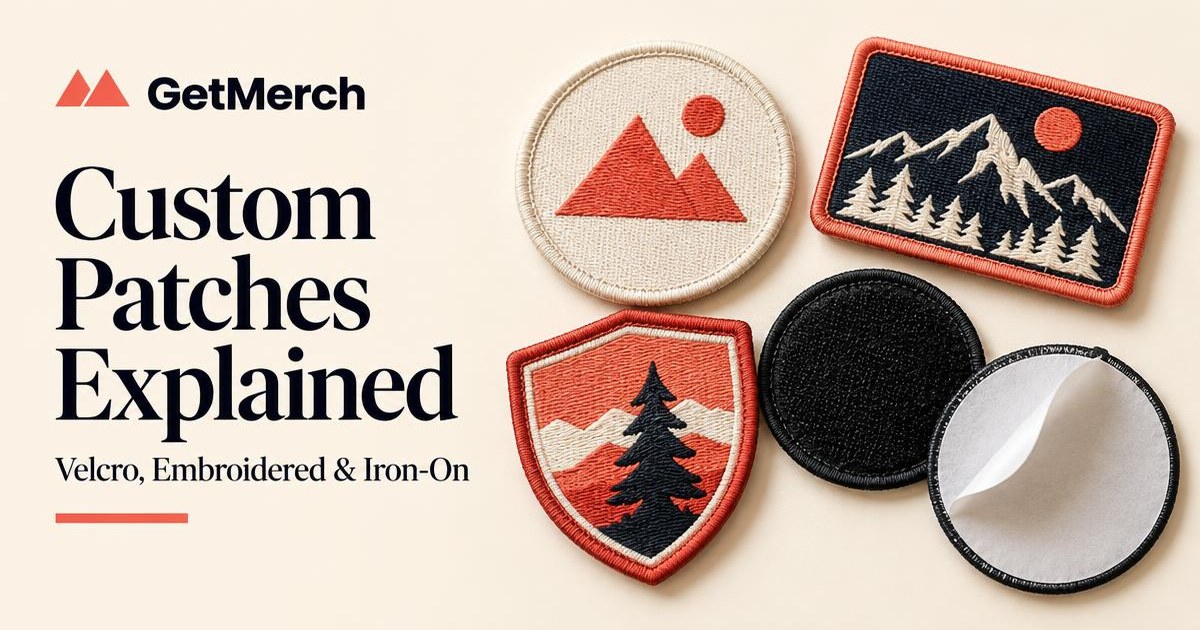
Patches are what most people picture on a modern trucker hat, and for good reason. A patch is decorated separately - embroidered, woven, leather, or rubber PVC - and then applied to the front panel, which lets you pack in far more detail and color than direct embroidery allows. Woven and printed patches handle fine detail and gradients; leather and PVC patches read as premium and rugged. The patch also gives the hat that finished, retail-product look that makes people forget it's swag at all.
Screen printing and direct print
Printing directly on the foam front is the budget-friendly, high-detail option. It handles fine lines and multiple colors that embroidery can't, and it keeps the front panel flat and lightweight. The trade-off is that print sits on the surface rather than in the fabric, so it can feel less premium up close than a stitched or patched hat. For big, colorful, print-forward designs at a tight price, though, it's hard to beat.
Sublimation on the mesh or bill
For all-over patterns or full-color art that wraps the panels or the underside of the bill, dye sublimation lets you go photographic. It's the specialty option - great for festival lineups, camo patterns, or a bold under-brim print, less relevant for a simple logo job.
Understanding minimum order quantities
Minimum order quantity, or MOQ, is the smallest run a decorator will produce for a given setup. It exists because most decoration methods have fixed upfront costs - digitizing an embroidery file, creating a patch mold or die, burning a screen - and those costs only make sense spread across a batch.
As a rough guide, custom snapback and trucker hats with embroidery or print tend to start around a couple dozen pieces, while custom patch hats often carry a slightly higher minimum because the patch itself has its own production run. The exact number depends on the decoration method and the blank, so the honest answer is to ask for your specific combination rather than trust a blanket figure. What's consistent across the board is the shape of the pricing: the per-hat cost drops steeply at the first few quantity breaks and then flattens out.
| Order size | What it's good for | What to expect on price |
|---|---|---|
| 24-48 | Small teams, a single event, a first test run | Highest per-unit cost; setup fees weigh heaviest here |
| 50-144 | Club merch, brewery retail, mid-size events | The sweet spot - setup is spread thin, price drops sharply |
| 150-500 | Festivals, large teams, retail programs | Strong per-unit pricing; worth comparing patch vs. embroidery |
| 500+ | Ongoing brand programs, national campaigns | Lowest per-unit cost; ask about the next tier before locking in |
The practical takeaway: if you need 40 hats, price out 50, because you may find the larger run costs only a little more once the setup is already paid for. It's the same dynamic we see across drinkware and apparel - the first quantity break is almost always the best value.
Design tips that keep trucker hats on heads
Respect the front panel's real estate
The usable area on a trucker front is smaller than it looks - roughly the width of a business card once you account for the seams and the curve at the edges. Center your mark, keep it bold, and resist the urge to fill every inch. A logo that breathes reads better from across a room than one crammed to the seams.
Pick the hat color before the artwork
This is the mistake we see most with headwear. A design built on a white mockup rarely survives on a black or forest-green front. Choose the front-panel color first, then build the artwork to sit on it. Classic combinations - black front with a cream patch, or a colored front with a tonal stitch - almost always outperform a busy full-color logo.
One idea per hat
Logo, plus tagline, plus website, plus a side hit, plus a back embroidery is how you end up with a hat nobody wears. Pick the single element that matters, put it on the front, and let the rest of the hat stay clean. If you must add a second touch, a small tonal mark on the side is plenty.
Match the silhouette to the audience
A flat-brim foam trucker signals something very different from a curved-bill rope hat. Before you fall in love with a design, picture the actual person wearing it. Festival crowd and outdoor brands lean flat and foam; corporate and older audiences lean curved and understated.
Ordering without the usual headaches
You do not need finished artwork to start. Send a logo file, a rough sketch, or even a written description, and our team will build print-ready artwork and share a proof before anything is produced - the design help is included, not an upsell. If you want to browse the full headwear and promo range first, the Accessories & Promo page pulls everything together, and the hats section of the main product catalog covers the specific blanks, colors, and fits available.
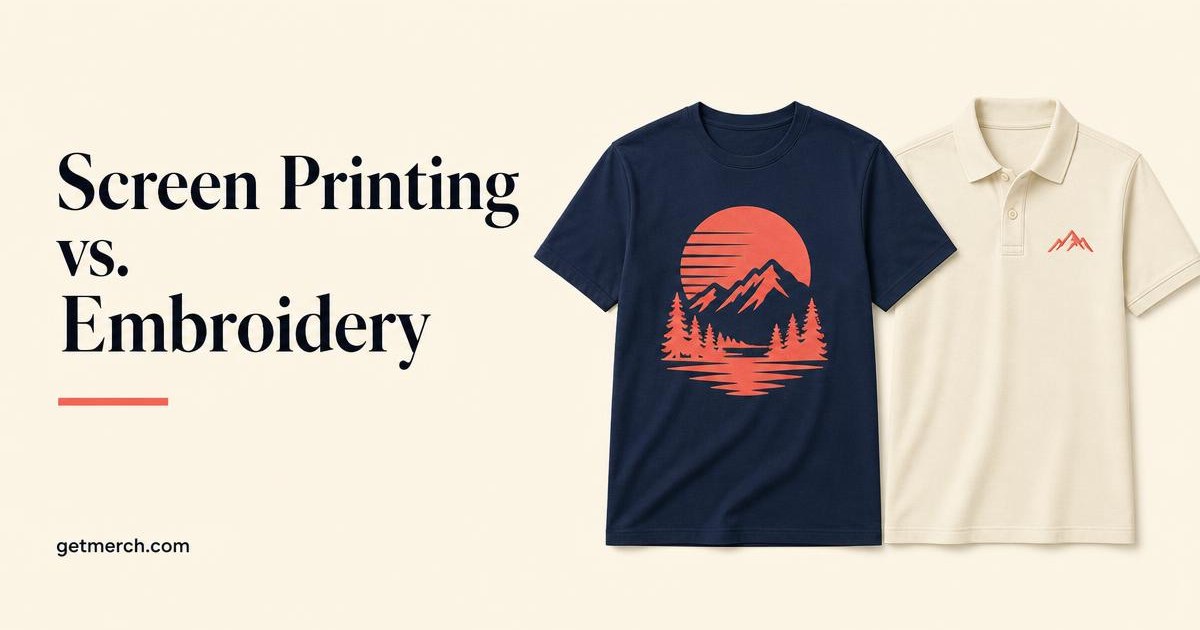
If your hat order is part of a bigger merch drop, it's worth thinking about how the pieces work together. Our guide to screen printing versus embroidery breaks down which decoration method suits which item, so your hats, tees, and hoodies feel like one coordinated set rather than five separate orders. And if you're weighing where to place the whole job, our honest comparison of GetMerch, CustomInk, and Vistaprint covers how pricing and turnaround actually differ in practice.
"The best branded hat is the one someone would still wear if you swapped your logo for theirs. Make it that good, and the branding rides along for free."
That's the whole test for headwear. Trucker hats earn their keep because people choose to wear them - to the game, to the bar, to the trailhead - long after the event that gave them away is over. Design the hat someone would have bought anyway, order enough to clear that first price break, and you end up with the rarest thing in promo: merch that markets for you every single day, because someone genuinely wanted to put it on.