
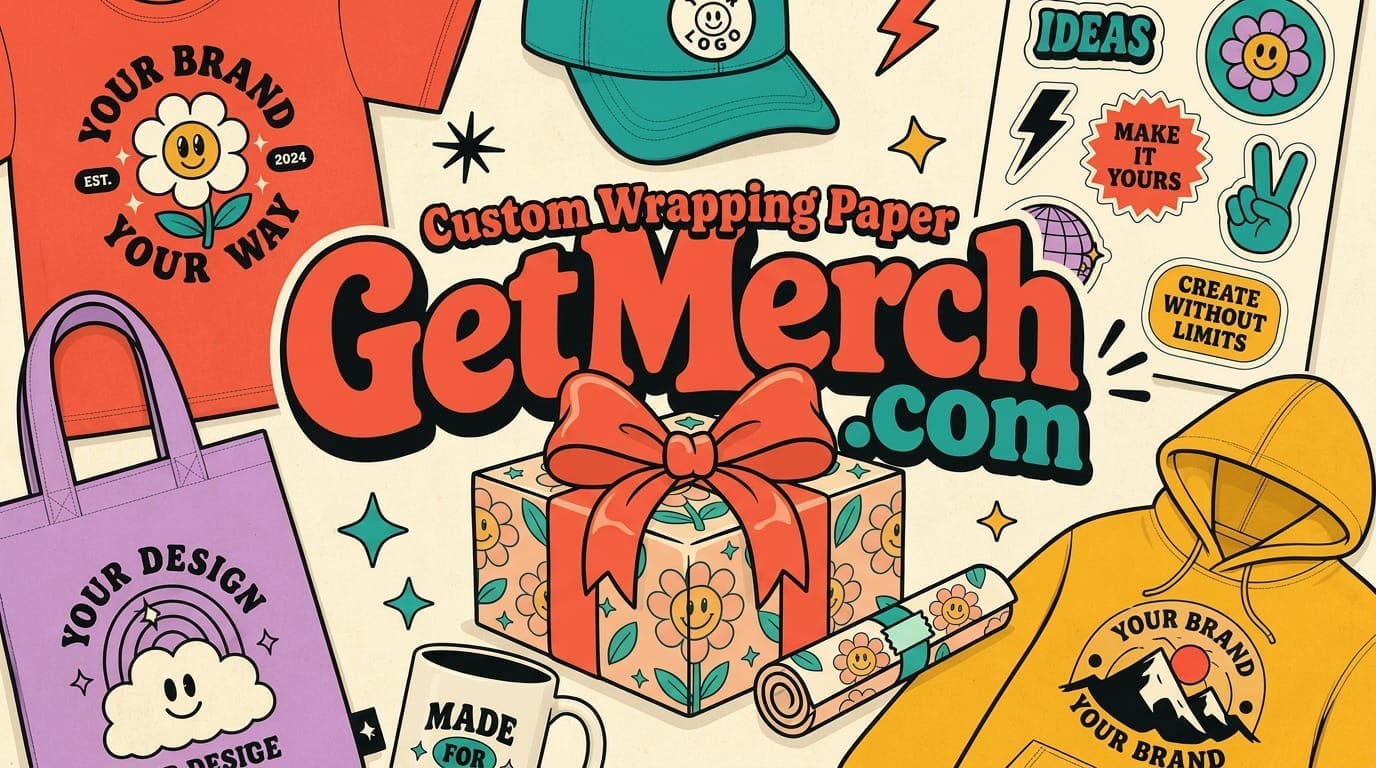
There is a particular moment, just before a gift is opened, when the wrapping does all the work. The person holding it has not yet seen what's inside. They are reading the paper instead - the colors, the pattern, the weight of it in their hands - and they're already deciding how they feel about the gift before the gift itself has said a single word. Custom wrapping paper is the art of taking that moment seriously.
Most people treat wrapping like an afterthought. A roll from the drugstore, some tape, a bow if they're feeling generous. But for weddings, holidays, milestone birthdays, corporate gifts, and brand unboxing experiences, the wrapping is part of the gift. It sets the tone, it signals effort, and - increasingly - it tells a story about who you are or what your company stands for.
What we actually mean by 'custom wrapping paper'
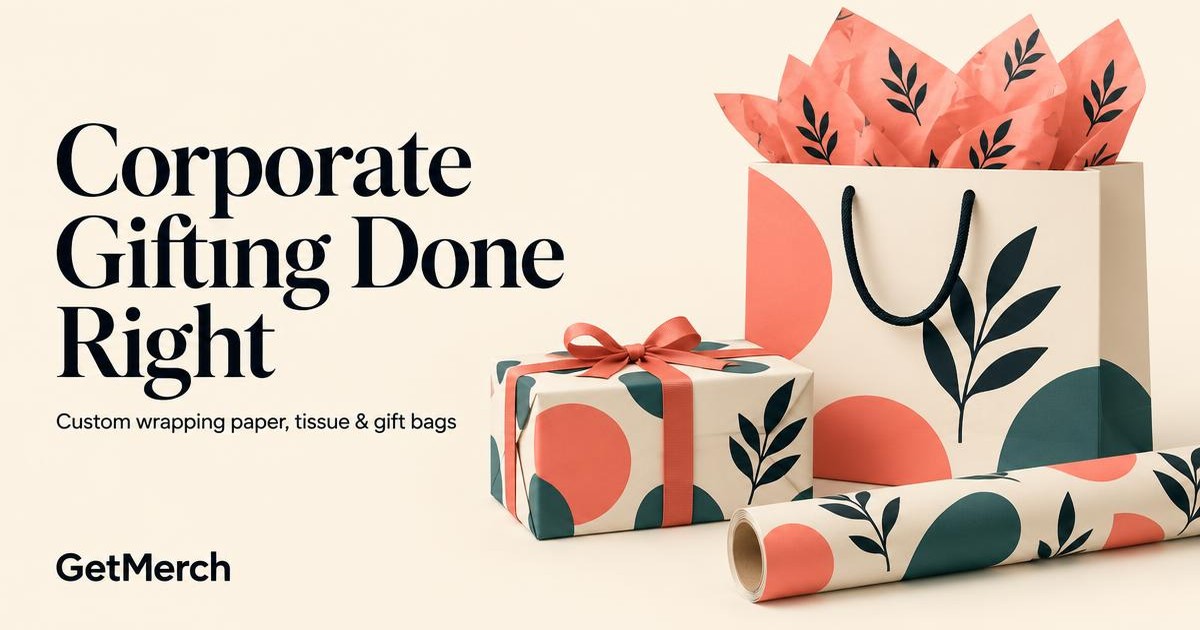
At its simplest, custom wrapping paper is any wrapping where the print - the pattern, the imagery, the colors, sometimes the text - has been designed specifically for you. That can mean a personal illustration repeated across a sheet, a brand pattern with your logo woven into a larger motif, a photographic print of a place that matters, or a single statement design that wraps an oversized box.
The format varies. Some custom paper is printed in flat sheets and rolled at the customer end. Some arrives on continuous rolls. Some is tissue paper for layering inside boxes. The choice depends on what you're wrapping and how many gifts you're wrapping at once - a single anniversary present has different needs than a thousand-unit influencer mailer.
Why wrapping carries more weight than people think
There's a reason luxury brands obsess over packaging: the unwrapping is the experience. Long before someone sees the product, they've already touched the paper, heard it crinkle, felt its thickness, noticed the print. Behavioral research on gift-giving consistently shows that more elaborate wrapping increases perceived value and emotional response to the gift inside. The gift didn't change. The frame did.
For brands, this is the entire premise of 'unboxing.' For individuals, it's the difference between handing someone a present and giving them a moment.
Occasions where custom wrapping earns its keep
Weddings
Couples are increasingly wrapping welcome bags, favors, and bridal-party gifts in paper that matches their wedding palette or pattern. It pulls the whole event together visually and gives guests a small keepsake of the day. The cost per sheet is trivial once you're already booking a venue, a florist, and a band.
Holidays
Holiday seasons are where custom wrapping shines for families and small businesses. A single design - a family crest, a kid's drawing, a custom illustration of the family dog - unifies every gift under the tree. For shops, branded holiday paper turns a generic gift purchase into something the recipient associates with you.
Milestone birthdays
Fortieth, fiftieth, sixtieth birthdays often deserve more than a card. A run of wrapping paper printed with a meaningful pattern, a photo collage, or an inside joke turns the gift table at the party into part of the celebration.
Business gifting and brand unboxing
This is where the ROI gets hard to ignore. Companies sending client gifts, influencer mailers, employee welcome packages, or product orders are using custom paper, tissue, and printed inner liners to extend brand experience into the home. A box opened on camera by a creator with thirty thousand followers becomes content that lives long after the product is unboxed.
How to design wrapping paper that actually works
A wrapping pattern is not the same as a poster. It's seen in fragments - the corner that's facing up, the strip that wraps around the side - and the recipient sees it from inches away, not feet. Patterns that look stunning on a screen often look chaotic on an actual box.
Repeats and scale
Wrapping paper almost always uses a repeating pattern (called a 'repeat'). The repeat needs to tile seamlessly so there are no visible seams between sheets. Scale matters too: a tiny, dense pattern reads as a texture from a distance, while a large-scale motif feels bolder but can get cropped awkwardly on small boxes.
Palette
Three or four colors is usually the sweet spot. Too few and the design feels flat; too many and it competes with the gift inside. If the paper is for a brand, pull the palette directly from the brand guide - wrapping is a chance to reinforce identity, not improvise on it.
Bleed, safe zones, and orientation
Any imagery near the edge of a sheet should extend past the trim line by at least an eighth of an inch so the cut doesn't leave a white sliver. Avoid placing important elements (a logo, a name) too close to the edge - they'll get folded under the box. And if you're using a pattern with a clear top or bottom, remember that wrapping rotates around the gift; non-directional patterns are usually safer.
Paper types and finishes
The paper itself shapes the experience as much as the print. Here's how the most common options compare.
| Finish | Feel | Best for |
|---|---|---|
| Matte | Soft, modern, low glare | Editorial designs, photography, brand work |
| Satin | Subtle sheen, premium hand | Weddings, luxury gifts, retail |
| Gloss | High shine, vivid color | Holiday, kids, bright patterns |
| Kraft | Earthy, fibrous, recyclable | Sustainable brands, rustic palettes |
| Tissue | Lightweight, layered inside boxes | Unboxing, e-commerce, apparel |
Matte and satin tend to photograph best and feel the most considered. Gloss is energetic but can look cheap if the artwork isn't strong enough to hold up to the shine. Kraft is the unsung hero for brands that want to signal craft, sustainability, and restraint without using any color at all.
Sustainability without the lecture
Wrapping has a real waste footprint, and a lot of recipients now notice. Recycled and FSC-certified papers are widely available and often cost the same as conventional stock. Avoid foils, glitters, and plastic coatings if recyclability matters to you - they make otherwise recyclable paper unrecyclable in most municipal streams.
Tissue and kraft are both compostable in most settings. Reusable fabric wraps (furoshiki-style) are a growing alternative for brands that want to lean hard into the sustainability story, though the unit cost is higher.
Common mistakes
- Designing for a screen, not a box - patterns look different wrapped around three dimensions.
- Ignoring the repeat - seams between sheets become visible if the pattern doesn't tile.
- Cramming a logo everywhere - restraint reads as premium; repetition reads as advertising.
- Choosing paper that's too thin - cheap stock tears, wrinkles, and telegraphs everything underneath.
- Forgetting the inside - printed inner liners and tissue cost very little and dramatically lift unboxing.
"The wrapping is the part you choose. The gift is the part they get. People remember both, but they only get to choose how the first one feels."
Where to go from here
If you're wrapping a few dozen gifts for one occasion, a short run of custom paper costs less than most people assume - and it changes the entire feel of the table, the box, or the mailer. If you're a brand, custom wrapping is one of the cheapest pieces of physical real estate you have to tell people who you are. Either way, the rule is the same: take it seriously, design it with restraint, and let the paper do the quiet work of making the moment feel intentional.